
The Middle East and North Africa (MENA) region is a region rich in natural resources. The region is endowed with more than half the oil reserve of the world, “ the total figure of MENA proven reserves equal to 860 billion barrels, which are 52% of global proven oil reserves” (Khatib, 2013). The wealth of oil is not equally divided among all countries where some are richer than others. Unfortunately, the region is the arena of several civil wars and conflicts. Different entities define the region in different ways. The MENA region does not have distinct borders; countries like Turkey, Afghanistan, and Sudan may or may not be considered part of this region (Chen, 2025).
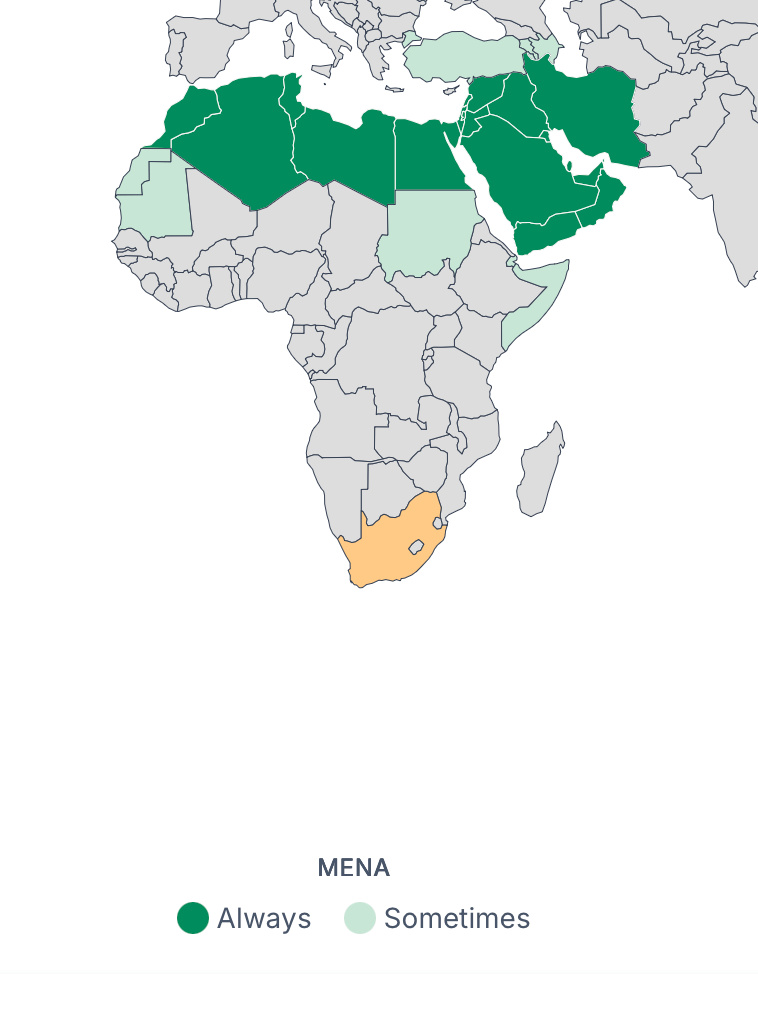
(World Population Review, 2025)
These countries are connected together due to prevalent factors such as proximity and the dominance of Islam and Arabic. This project adopts the same definition of the World Bank in defining the countries of MENA region (Bank, 2020).
Table 1: The MENA Countries
| 1 | Algeria, |
| 2 | Bahrain, |
| 3 | Djibouti, |
| 4 | Arab Republic of Egypt, |
| 5 | Islamic Republic of Iran, |
| 6 | Iraq, |
| 7 | Jordan, |
| 8 | Kuwait, |
| 9 | Lebanon, |
| 10 | Libya, |
| 11 | Morocco, |
| 12 | Oman, |
| 13 | Qatar, |
| 14 | Saudi Arabia, |
| 15 | Syrian Arab Republic, |
| 16 | Tunisia, |
| 17 | United Arab Emirates, |
| 18 | West Bank and Gaza, |
| 19 | Republic of Yemen. |
References
Chen, J. (2025, August 27). Middle East and North Africa (MENA): Key economies and oil reserves insights. Investopedia. https://www.investopedia.com/terms/m/middle-east-and-north-africa-mena.asp
Khatib, H. (2013). Oil and natural gas prospects: Middle East and North Africa. Energy Policy, 64, 71–77. https://doi.org/10.1016/j.enpol.2013.07.091
World Population Review. (2025, November 21). MENA countries. https://worldpopulationreview.com/country-rankings/mena-countries
 MENA Writing project